
How to Care for Your New Cast Iron Skillet
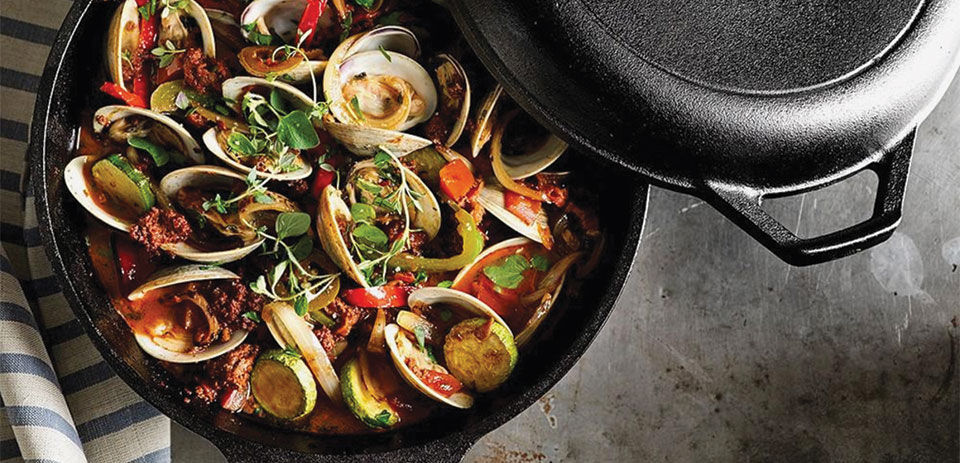
Cast iron skillets are a prized piece of any serious cook’s collection. These skillets are extremely durable and, once heated up, hold their heat, allowing for even cooking and easy searing of meats. Not only that, but cast iron skillets are designed to last longer than any other pan type. When well cared for, one set of cast iron skillets and pans is all a cook will ever need.
If you have recently purchased a new cast iron skillet, you may wonder how you can best take care of this new piece of cookware. Unlike a normal pot or pan, cast iron requires a different approach for care. We will outline what to do from day one with your cast iron skillet and how to continually care for this pan throughout its long life.
Day 1: The First Cleaning
After purchasing a new cast iron skillet, you will want to clean your new piece of cookware. While most people have heard that you should never use soap on a cast iron skillet, the reality is that soap can be used in some circumstances. For the first cleaning, soap is actually a great choice.
Hot soapy water will help you remove any dust or debris that came from the factory. This will ensure the skillet is disinfected before use.
Use a scrub brush — opt for one specifically designed for cast iron — and give your new pan a good scrub. Once it is clean and rinsed of any soap residue, dry the pan thoroughly. One of the most important tactics to caring for your new skillet will be to always dry the skillet after washing it with water. Leaving water on your pan can lead to rust, which will cause more work to restore the pan back to a seasoned state.
Cleaning After Use
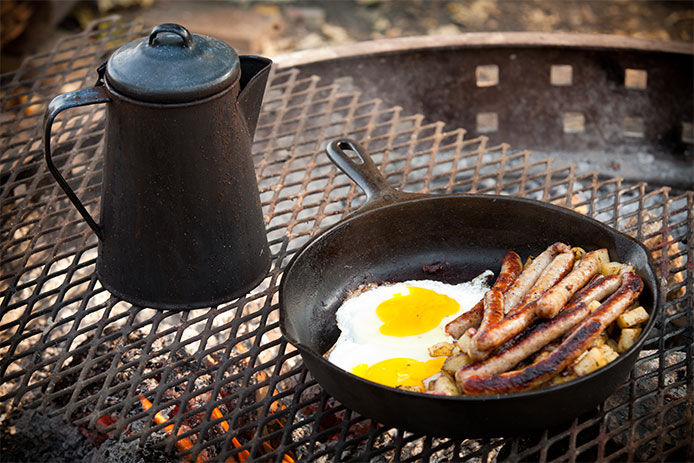
While the first cleaning of your pan is critical and can involve the use of soap, continual cleaning will also be necessary to ensure your skillet is in tip-top shape. The following are all key components to cleaning a cast iron skillet after cooking up a nice big steak or a plate of eggs:
- Clean immediately: The best way to keep your cast iron skillet in quality shape is to always clean immediately after cooking with it. Leaving your pan to sit overnight can make it difficult to clean. Unlike many pots and pans, soaking your skillet is not recommended as it can lead to rust. By cleaning immediately, you can more easily remove food that is stuck on.
- Rinse and scrub: With the pan still warm, put your cast iron skillet under warm water and use your skillet brush to clean off the surface. If needed, use a plastic pan scraper to remove stuck-on food. For most meals, this rinse and scrub will be enough.
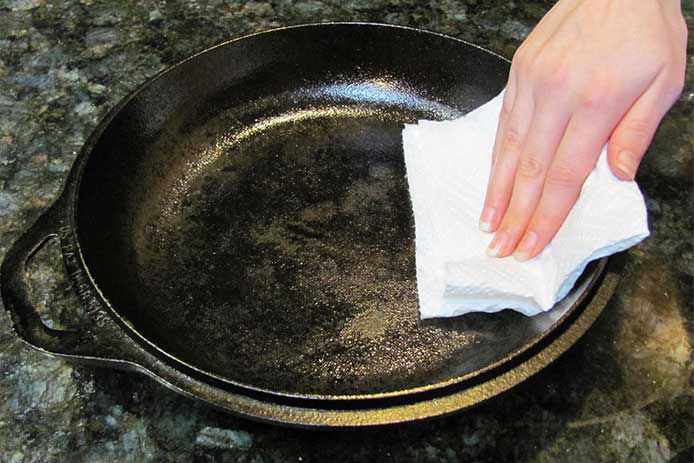
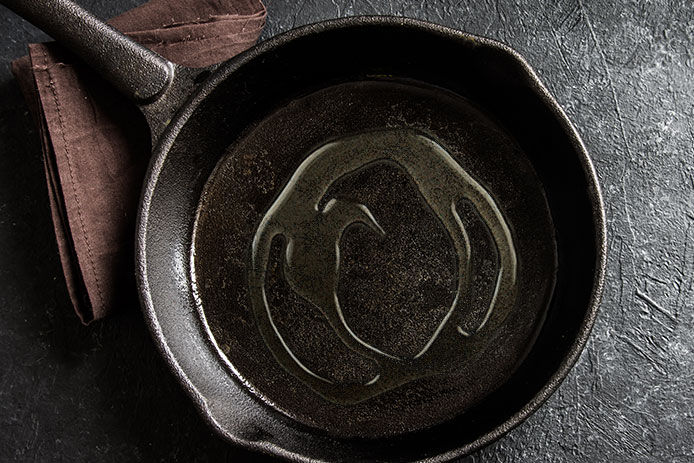
- Dry and oil: Once your skillet has been rinsed, dry the pan thoroughly. You can either put the skillet over low heat to dry, or you can dry by hand. The key is to make sure the skillet is truly dry. Once the skillet is dry, take around one teaspoon of oil and rub the entire pan with a paper towel. Spread the oil evenly and rub off any excess.
Extra Tough Cleaning
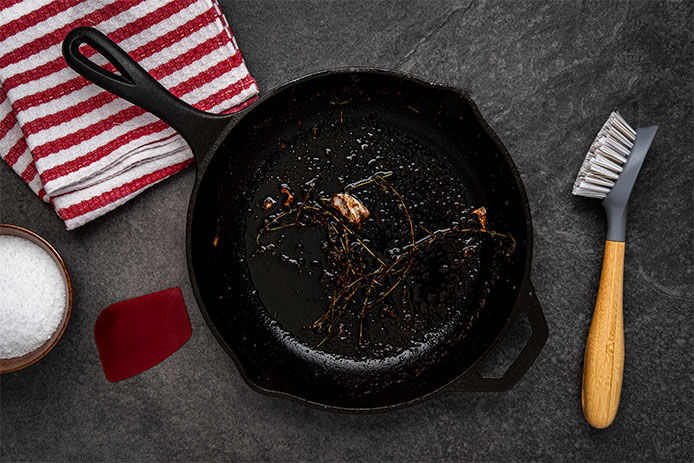
Sometimes, normal cleaning won’t remove food completely from the skillet. In this case, you might need to take a more thorough approach. For tough stuck-on food, create a paste of coarse salt and water. Scrub the pan with the paste and rinse. If the food still won’t come off, try adding water to the skillet and put on high heat. This can help to loosen the debris.
In the worst-case scenario, you can use a little soap or a steel wool brush. While this is not ideal as it strips your pan of some of its seasoning, you can simply re-season your pan after cleaning.
Seasoning and Re-Seasoning
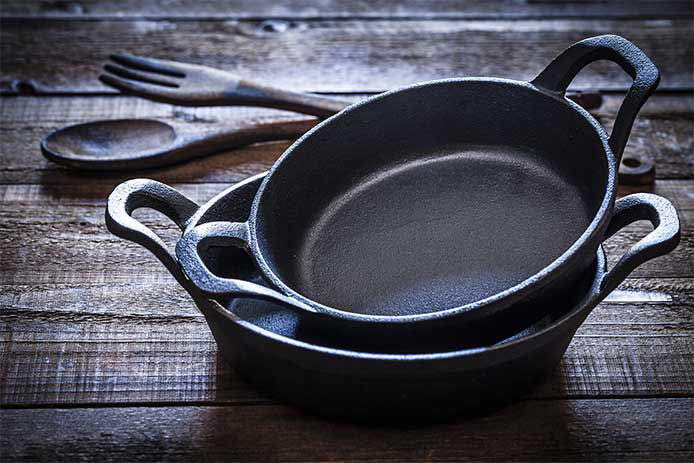
Whether you just purchased your skillet or you are looking to re-season your pan, knowing how to season your cast iron is key to the long-term condition of your pan. First, understanding what seasoning is will help you understand how the process works. Seasoning is simply baking multiple levels of oil into the skillet. These baked-in layers of oil create a non-stick surface that is rust-resistant and durable.
Sometimes, your new pan will come pre-seasoned. However, it never hurts to clean the new pan and then re-season it.
Storing and Bonus Tips for Care
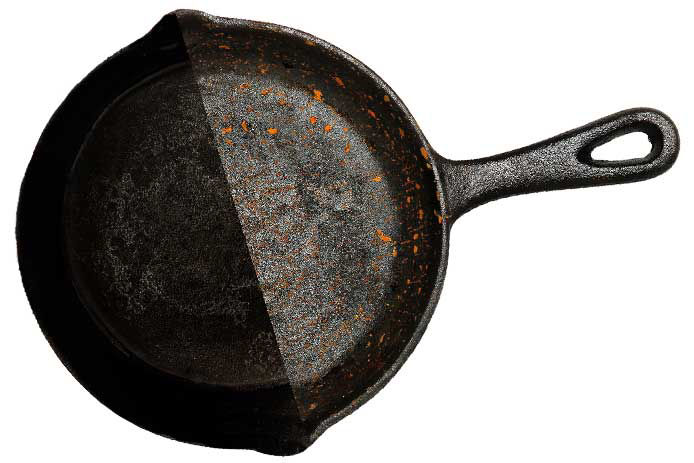
Once your cast iron skillet is clean and well seasoned, it is time to take a few extra tips for care. First, never store your skillet when wet. A wet skillet will rust. When storing your cast iron, use a paper or cloth towel to protect the skillet if you plan to stack other pots and pans on top of it. This will also help pull away any leftover moisture.
Next, only use gentle items on your skillet. For example, choose wood, rubber, or silicone utensils. Avoid metal or other items that will scrape the skillet, removing layers of seasoning.
Finally, never store food in any cast iron skillet, pot, or pan. Instead, always remove food and clean the cast iron immediately while still warm.
With the right care, your cast iron will last for decades to come. A well-seasoned skillet will become your new best friend in the kitchen.
Related Articles
How to Replace and Install a Bathroom Faucet in 6 Easy Steps
Easily upgrade your bathroom or kitchen with some new fixtures
Learn more
Home Office Design for Small Spaces
Ingenious designs for compact workspaces that optimize productivity and creativity
Learn more
Energy-efficient Tips: How to Save the Most Energy at Home
Projects and tips to help you save money on the electric bill
Learn more
7 Ways to Decorate a Small Room
Easy, cost-effective tips for maximizing your space and style
Learn more