
Every homeowner needs a few reliable tools to handle everyday repairs and projects. You do not have to buy a large or expensive collection. With less than $100, you can build a starter toolkit that includes the most practical hand tools for home maintenance. This guide outlines the essentials, their uses, and how they help you stay prepared for common tasks.
The Beginner’s Homeowner Toolkit: A Full Set of Hand Tool Essentials for Under $100
1. Claw Hammer ($10-$15)
A claw hammer is one of the most useful tools for any homeowner. It is needed for:
Driving nails into wood when hanging shelves, assembling furniture, or building small projects.
Removing nails when repairing trim, pulling out old boards, or correcting mistakes.
Light demolition, such as prying apart wooden crates or removing damaged molding.
Choose a claw hammer with a steel head and a comfortable grip so it can handle frequent use.
2. Screwdriver Set ($10-$15)
A small set of flathead and Phillips screwdrivers handles most household jobs. Examples include:
Tightening loose cabinet hinges, drawer handles, and door knobs.
Assembling furniture, electronics, or toys.
Removing or replacing wall plates for outlets and light switches.
Choose a screwdriver set with multiple sizes to avoid stripping screws.
3. Adjustable Wrench ($12-$18)
One tool that fits many nuts and bolts. Uses include:
Tightening or loosening plumbing connections under sinks.
Assembling bicycles, grills, or lawn equipment.
Handling odd-sized bolts without buying a full wrench set.
Look for an adjustable wrench with a smooth adjustment mechanism and solid grip.
4. Long Nose Pliers ($12-$15)
Compact tool for gripping, bending, and cutting. Useful for:
Bending wire while hanging light fixtures or repairing electronics.
Reaching small parts in tight spaces, like under a sink.
Cutting thin nails, staples, or zip ties.
Long nose pliers take less space than a full plier set but cover most small tasks.
5. Utility Knife ($5-$8)
Sharp, replaceable blades make it one of the most versatile tools. Tasks include:
Opening boxes, packages, and cutting tape.
Trimming carpet edges or vinyl flooring.
Cutting drywall or insulation for small repairs.
Choose a utility knife with a locking blade and spare blades stored inside the handle.
6. Hex Key (Allen Wrench) Set ($6-$12)
Essential for hex screws found in many products. Typical uses are:
Assembling flat-pack furniture like desks, chairs, and shelves.
Adjusting bicycles, scooters, or exercise equipment.
Tightening cabinet pulls or small mechanical parts.
A folding hex key set keeps all sizes in one tool and prevents losing pieces.
7. Tape Measure ($5-$10)
Required for accurate measurements in any project. Examples include:
Measuring walls for picture frames or shelves.
Checking dimensions before buying furniture or appliances.
Marking cut lines for wood, drywall, or flooring.
A 25-foot tape measure is compact but long enough for most home needs.
8. Toolbox ($20-$30)
Keeps tools in one place and easy to carry. Benefits include:
Preventing loss of small tools like screwdrivers and pliers.
Organizing spare parts, screws, and blades.
Making it simple to bring tools to any room or even outdoors.
Choose a sturdy toolbox with a removable tray for small items.
Ready-Made Tool Sets
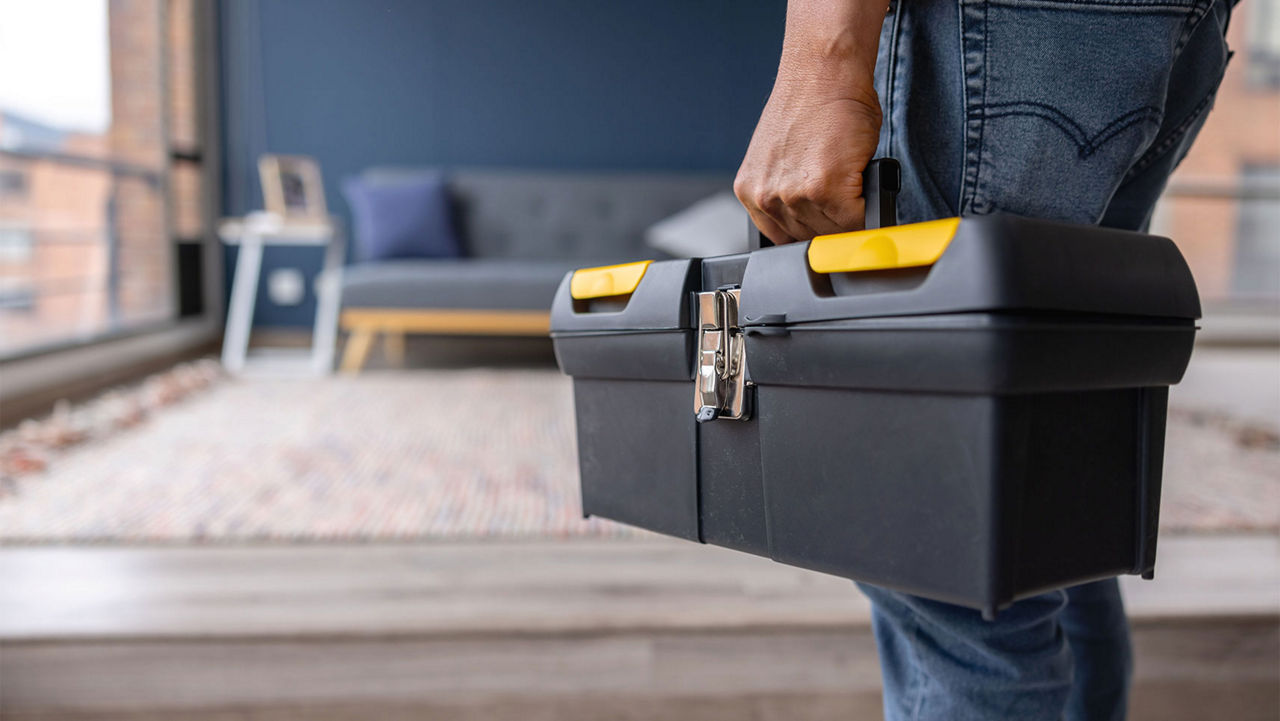
Instead of buying each tool separately, you can also choose from ready-made tool sets. These sets include many of the essentials listed above and may already have everything needed for common repairs and projects.
Building a reliable toolkit does not have to cost much. With less than $100, you can cover the essentials needed for everyday repairs and small projects around the house. A simple set of hand tools gives you the ability to fix problems quickly, save money on minor repairs, and stay prepared for the unexpected. Whether you buy tools individually or as part of a ready-made set, the key is to start with the basics and add more only when needed.
Interesting Facts About DIY and Home Repairs
Over 80% of U.S. homes are more than 20 years old. More than half were built before 1980, and 38% before 1970.
With about 137 million homes in the country, a massive share needs regular maintenance and repair.
Married couples are more likely to take on renovation projects, partly because they are more likely to own homes.
36% of households do DIY projects to improve living spaces, while 29% focus on repairing worn-out fixtures and fittings.
Kitchens and bathrooms are the most renovated rooms. Kitchen remodels rose from 54% in 2020 to 77% in 2021, and bathrooms remain a close second.
Painting is among the most popular DIY projects. 55% of homeowners plan an interior paint refresh, and 33% plan a bathroom remodel.
Homeowners completed an average of 3.7 projects in 2021 compared to 2.7 in 2020. Each project cost about $2,800.
Most homeowners remodel every three to five years, and 40% plan a remodel within two years.
Nearly 65% of DIYers are willing to pay more for ethically and sustainably produced tools and materials.
Related Articles
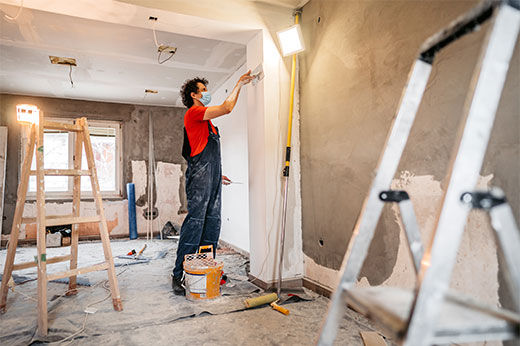
Renovating a 50-Year-Old Home: Beginner’s Guide to Getting Started
A practical beginner’s guide to renovating a 50-year-old home, covering safety checks, structural repairs, system updates, and modern upgrades.
Learn more
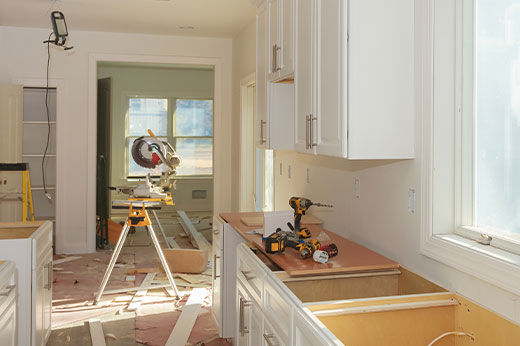
What’s the Difference Between a Home Remodel and Renovation?
Learn the difference between these two major projects and start updating your home
Learn more
How to Install a Ceiling Fan in 7 Steps
Cut your energy bill down with these simple steps for adding a ceiling fan to any room
Learn more
Which Leatherman Should I Get?
When a pocket knife won't do, check out the best multi-tool on the market!
Learn more