
Stain and Protect with Minwax

Discover tips, tricks, and helpful do's and don'ts for every phase of your wood finishing project from Minwax and your neighborhood Valu Home Center!

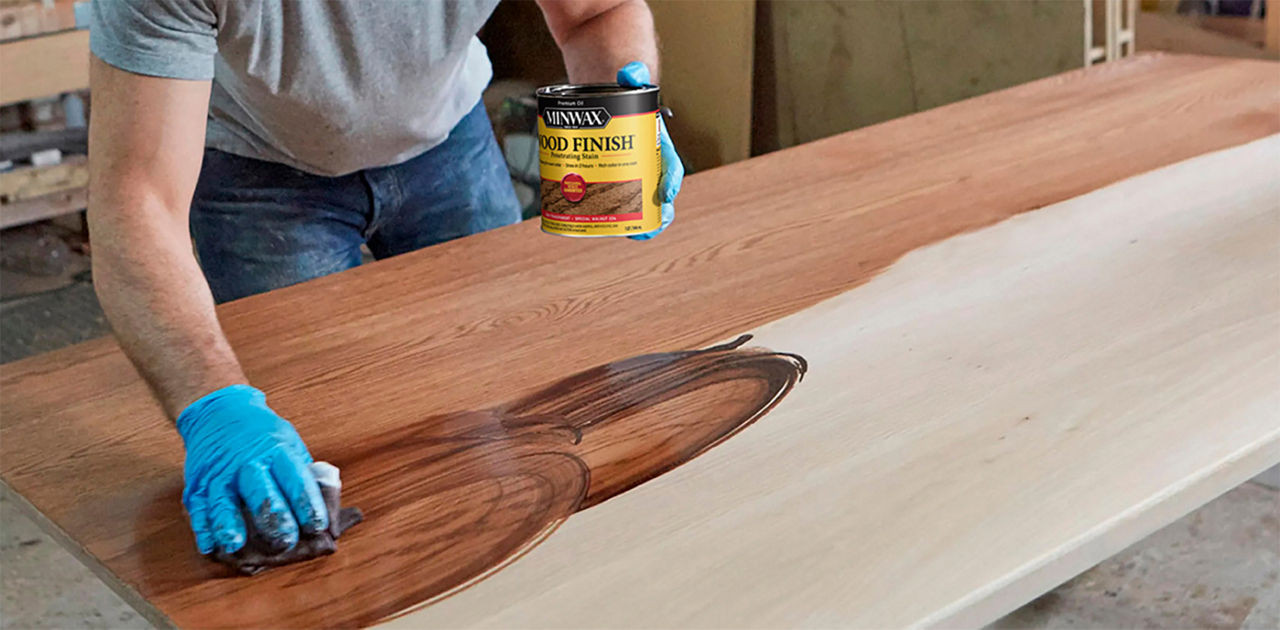
Man staining his table with minwax

Do's

Always prepare the wood with light sanding.

Apply Minwax® Pre-Stain Wood Conditioner to ensure an even stain color (see Wood Preparation for other tips).

Stir the can thoroughly.

Stir the can thoroughly to evenly redistribute any color pigments that may have settled to the bottom.

Test any stain you are considering.

Test any stain you are considering on an inconspicuous spot to ensure that the color of the stain—in conjunction with the natural color of the wood—produces the color you desire.

Apply a second coat.

If you want a darker, richer tone, apply a second coat according to the label directions.

Don'ts

Leave hinges, handles, knobs, or pulls on a piece.

Remove hinges, handles, knobs, or pulls before you start staining or finishing. Wood finishing products may change the color of any metal hardware.

Attempt to obtain a darker color by allowing any unabsorbed stain to dry on top of the wood.

This will later peel off. Stains are formulated to dry in the wood, not on the wood.

Apply a clear protective finish before the stain has dried completely.

The solvent in the finish will activate the damp stain, allowing your brush or cloth to pull the stain out of the pores of the wood.

Staining Interior Wood

Piece of wood with stain all over it and an open can of stain with a used paint brush
Stain Adds Beautiful Color

While wood in its natural state can provide breathtaking beauty, it doesn't always match the other colors or wood tones in our home. Adding stain to bare or stripped wood can both change the color and highlight the grain pattern of any interior wood.

Since wood is a product of nature, it can vary from tree to tree, even in the same wood species. Avoid surprises: first test any stain you are considering on an inconspicuous spot to ensure that the color of the stain—in conjunction with the natural color of the wood - produces the color you desire.

Choosing a Wood Stain

Minwax® stains are available in two formats: water or oil-based. Use the guidelines below to help decide whether to use an oil-based or water-based stain on your next project:

OIL-BASED STAINS 

  • Give you a longer working time, enabling you to stain floors, cabinets, paneling, and doors without the worry of dried lap marks.
  • Do not raise the grain, eliminating the need for additional sanding. 
  • Try Minwax Wood Finish or Minwax Gel Stain

WATER-BASED STAINS

  • Are lower in odor than oil-based stains.
  • Dry faster, enabling you to stain and finish in one day.
  • Require only soap and water for clean-up
  • Come in a wider range of vibrant stain colors.

How to Apply a Clear Protective Finish

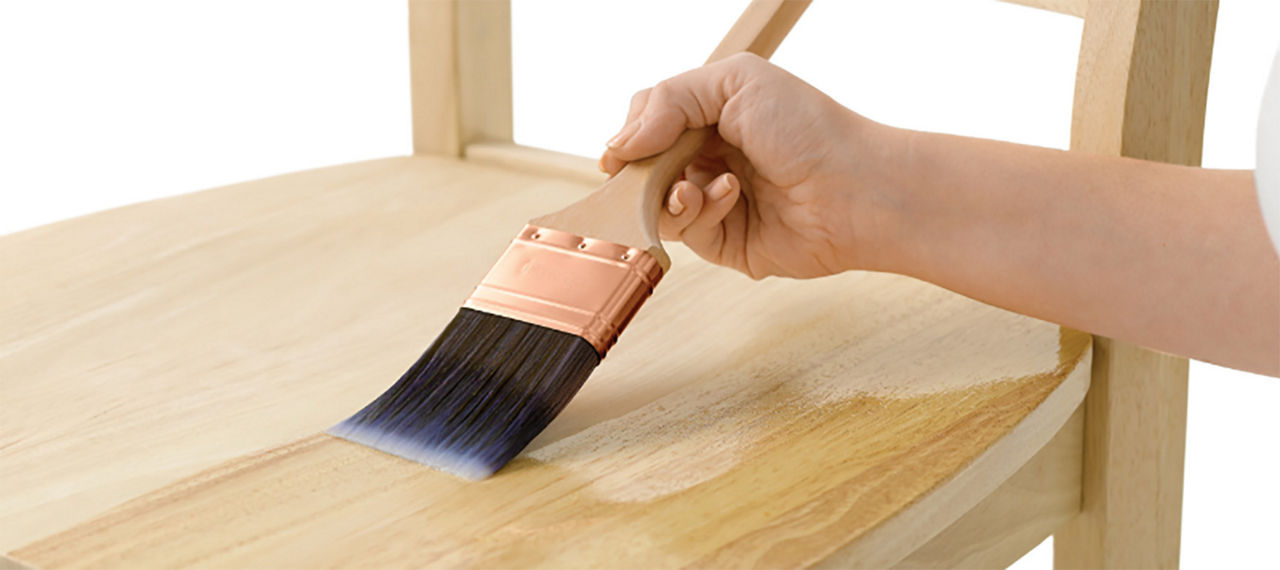
Someone putting a protective finish of clear minwax

Most clear finishes are applied with a brush, working in the direction of the grain of the wood. After it dries, sand lightly. Then remove all the sanding dust and apply a second coat. For added durability, a third coat can be applied. Most projects will be ready for normal use in 24 hours. Be sure to follow the label directions for the product you are using.

Try One Coat PolyurethanePolycrylic Crystal Clear Topcoat, or Polycrylic Protective Finish Spray

Stir the clear finish well before and occasionally during use.

Be sure to mix in all material that may have settled to the bottom of the can.

Never shake a can of clear finish.

Shaking will cause bubbles in the dried finish.

Always apply thin coats.

Thick coats take longer to dry and are more likely to be uneven and attract dust.

“Tip-off” each section.

To minimize brush marks and bubbles, “tip off” each section of your project at a 45-degree angle and lightly run the bristles over the entire length of the wood.

Test before you sand.

To be certain that the finish is ready to be sanded, sand a small, inconspicuous area first. If the finish starts to “ball up”, STOP. It is not dry enough to be sanded. Wait at least 30 minutes then test again.