Impact Drivers vs. Drills: Which is Right for Your Project?

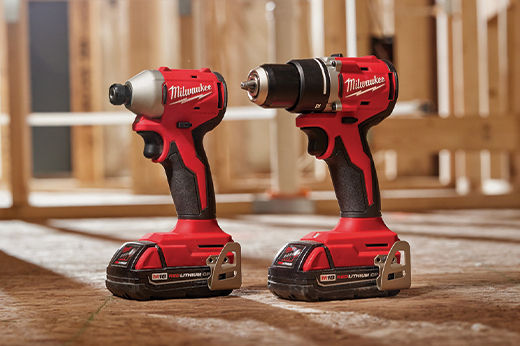
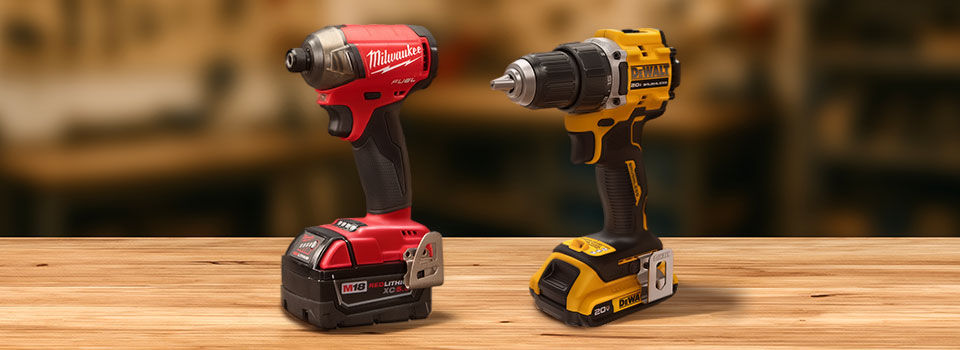
DEWALT ATOMIC 20V MAX Brushless 1/2 In. Compact Cordless Drill and Milwaukee M18 FUEL SURGE Brushless 1/4 In. Hex Hydraulic Cordless Impact Driver on top of wooden workbench table in workshop background

Need to upgrade an older drill, or unsure whether you should add an impact driver to your tool kit? When you’re shopping for one of these similar-looking tools, you may find them sharing shelf space at the store, but they serve different purposes. Before you choose between an impact driver vs. a drill, consider the projects you’ll want to tackle and how each tool can help accomplish these tasks around your home.

Read on to learn the differences between impact drivers and drills and the pros and cons of each so you can reach confidently for the right tool for the task at hand.

What is a Cordless Drill?

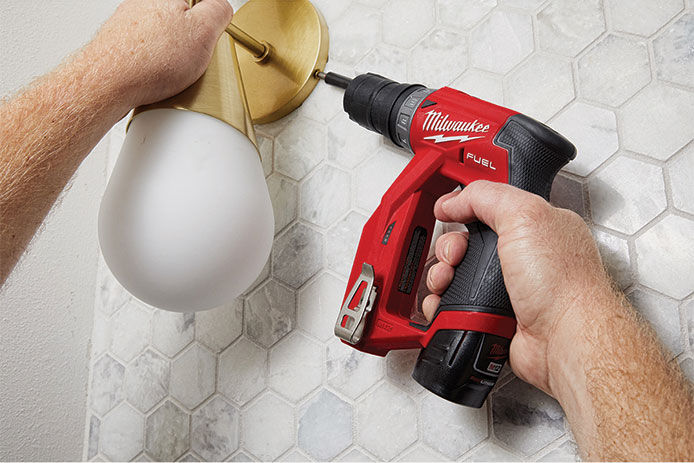
A hand holds a Milwaukee M12 FUEL Brushless 3/8 In. Installation Cordless Drill, fastening a brass wall sconce base to a tiled wall, with a glass light fixture and reflections visible below.

Cordless drills are a must-have tool in any DIYer’s kit. Their variable-speed motors power a simple rotary motion in forward and reverse, controlled by a trigger, so users can drill pilot holes or screw into lighter-weight materials like wood and drywall. Most include an adjustable clutch that allows users to fine-tune control over the torque’s output to avoid stripping screws

Unlike an impact driver, a drill will usually stop when it encounters resistance before it overloads. Drills have keyless or keyed chucks that accommodate most bit sizes. For screwing in smaller fasteners and general-purpose use, reach for a drill.

What Is an Impact Driver?

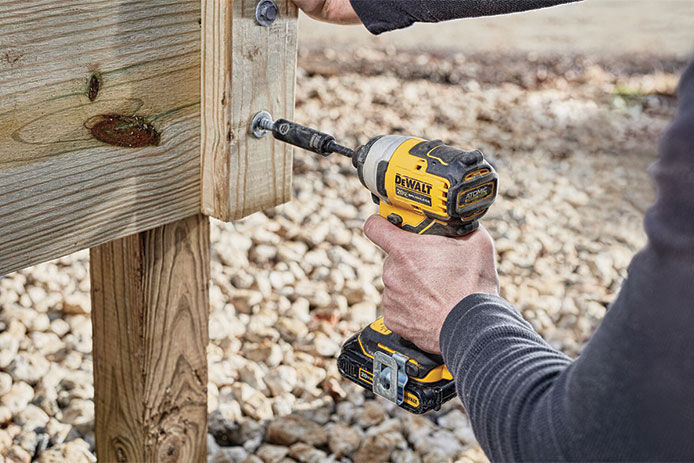
Person using a DEWALT ATOMIC 20V MAX Brushless 1/4 In. Compact Cordless Impact Driver to drive a bolt into a wooden post

An impact driver looks very similar to a drill, but its lighter weight and more compact design make it easier to get into tight spaces and cut down on fatigue during longer work sessions. Like drills, impact drivers also feature rotational motion, but they deliver more torque than a drill can by adding impact pulses. 

Unlike a drill, an impact driver doesn’t have a clutch, so when it hits resistance, it doesn’t stop. Instead, it responds with automatic torque bursts that continue to drive in a screw through harder, denser materials like knotted wood or concrete. Impact drivers have 1/4” quick-change hex collets, so they require bits with a matching hex shank and won’t work with round drill bits. 

If you’re building a deck and need to drive long screws or lag bolts into dense wood, an impact driver will help you complete the job efficiently and with less effort.

Hammer Drill vs. Impact Driver

One popular subtype of drill, the hammer drill, also applies force, but it’s not the same tool as an impact driver. Hammer drills use rotational motion along with a forward striking force to drive screws into concrete, brick, and masonry. Like the name suggests, hammer drills “hammer” screws into these materials while twisting. 

However, the hammer feature on a hammer drill can be turned off so that the tool can be used as a regular drill. Impact drivers work differently, in that the twisting motion, or torsional impact, is where force is applied. Both tools suit heavier-duty jobs, but they are too powerful for projects requiring precision and control.

Advantages of Drills vs. Drivers

Drills and drivers both have their place in your tool kit, and each has advantages, but they’re not necessarily interchangeable. Again, think about those projects on your to-do list when adding one (or both) to your workspace.

Advantages of Drills

  • Versatility for Everyday Tasks: Ideal for drilling and light screwdriving in wood, plastic, drywall, and metal, they work well with a wide range of bits and attachments.
  • Clutch Control: Adjustable torque settings reduce the risk of overdriving screws, especially helpful for beginners or when working with delicate materials.
  • Precision Over Power: They are best for jobs that need careful control and require less frequent use.

Advantages of Impact Drivers

  • Superior Driving Power: These higher-torque tools are ideal for sinking long screws or lag bolts into dense materials.
  • More Compact & Ergonomic: Typically smaller and lighter design makes them  easier to use in tight spaces or for overhead work.
  • Less Kickback, More Speed: The pulsing action reduces wrist strain during tough jobs and drives screws faster than a drill can.

Applications for Drills vs. Impact Drivers

While there is some overlap, drills and impact drivers have different applications. Choosing the right one will help you work more efficiently or precisely, depending on your needs. In general, drills are the best choice for light- to medium-duty jobs or when precision is required. Impact drivers are ideal for heavier-duty, repetitive use through denser materials.

Ideal Projects for Drills:

  • Installing light fixtures and curtain rods
  • Assembling flat-pack furniture
  • Drilling pilot holes in drywall and wood
  • Mounting pictures and mirrors

Ideal Projects for Impact Drivers:

  • Building a backyard deck or a fence
  • Framing a garden shed
  • Drilling into overhead areas or tight spaces drills can’t reach
  • Repetitive driving of fasteners

Torque and Power Comparison

A tool’s torque is a tool’s turning and twisting force. A tool with more powerful torque will be better at driving longer or thicker fasteners like deck screws or lag bolts. For these heavy-duty applications, impact drivers will efficiently do the job without slipping or shutting off when they hit resistance. Instead, they’ll keep going, delivering those quick bursts of torque to drive fasteners through knotted wood or concrete.

Drills have less powerful torque than impact drivers, but they’re easier to control with their built-in adjustable clutch and trigger mechanism for smoother feedback. The trade-off for less torque is more precision, great for more delicate tasks like drilling into drywall, sheet metal, or wood.

Types of Bits and Compatibility

A major difference between drills and impact drivers is the bits they accept. Both drills accept 1/4" hex-shank bits, but drills allow more versatility by accepting round-shank bits as well. Impact drivers accept only 1/4" hex-shank bits. The higher torque of impact drivers requires more durable bits that have higher impact ratings to ensure they will hold up under heavier use without snapping or quickly wearing out. 

Choosing the right bit for each tool will help keep your tools in good operation condition for years to come. Here’s a quick breakdown of the options for each:

Tool Size and Weight

As mentioned, impact drivers and drills may look similar, but there are key differences in their build and footprint. Drills tend to be longer and heavier. Their heavy weight may make them seem more powerful than their impact driver cousins, but they are less maneuverable, so not an ideal choice for overhead use or tight spaces.

The more compact impact driver, on the other hand, is better balanced between the front and back of the tool, so it may cause less fatigue during heavier use than a drill. This makes impact drivers more ergonomic, producing less strain on the wrist. Which tool you should reach for depends on the materials you’re drilling into and the length of your project and frequency of use for the tool.

Drill vs Impact Driver Comparison Table

FeaturesDrillImpact Driver

Torque Control

Clutch

None (torque specs differ by model)

Speed Settings

Variable trigger

Selectable-speed models available

Best Use Cases

  • Mounting artwork
  • Hanging Shelves
  • Flat-pack furniture assembly
  • Building a fence or deck
  • Framing a garden shed or pergola
  • Installing cabinet
  • Drilling overhead or in tight areas

Chuck Type

Keyed or keyless

¼” quick-change hex collet

Bit Compatibility

Spade, twist, hole saw, countersink, masonry, tile, Torx, Phillips, hex, square

¼” hex only

Beginner Friendly?

Yes

No


Do You Need a Drill or Impact Driver?

When choosing the right tool for your kit, think about how often you’ll use the tool and what types of projects are on your to-do list. If you plan to use it only occasionally for mounting a work of art, hanging a shelf or two, or securely assembling flat-pack furniture without an Allen wrench, a drill may be all you need. 

For more delicate, specialized jobs like finer woodworking or drilling into tile, an impact driver’s powerful torque and lack of a variable speed could damage your materials or require more cleanup to smooth out surface abrasions.

On the other hand, if you’re planning bigger projects, like renovating a kitchen with lots of cabinets or building a deck, you’ll work more efficiently with an impact driver. For drilling overhead and in tight spaces that are harder to access, you can rely on the compact design of an impact driver. For longer work sessions and a higher volume of fasteners or for driving larger screws and bolts, you’ll need an impact driver.

No matter which type of tool you choose, consider whether you want a brushless or brushed motor. Brushed motors are less expensive, but the brushes wear out faster, while brushless motors provide more battery efficiency to support more frequent use. 

Still can’t decide? See our full guide: How to Choose the Best Cordless Drill or Driver

If your list has both types of projects and you need precision and power, you can buy sets with both an impact driver and a drill so you’ll always have the right one on hand.

Find Cordless Drills & Impact Drivers at Do it Best

Drills and impact drivers are not interchangeable, and choosing the right one for your project may seem daunting at first, but consider your needs and future projects can guide you. Beginner-friendly drills offer versatility and precision for general drilling. Impact drivers provide powerful torque and efficiency for heavier tasks and more frequent use.

Whether you’re a first-time homeowner buying a drill for lighter projects around your new house or a DIY pro who needs an impact driver for tackling a major kitchen renovation or building a backyard deck, Do it Best has everything you need for your project. Browse all of our cordless drills and drivers at Do it Best and take advantage of home delivery or same-day pickup at your local Do it Best store.

test

7 Best Cordless Drills & Drivers Under $150

Shopping for a drill on a budget? This guide showcases the best cordless drills and drivers around $150 that deliver value and reliability for beginners.

Learn more
test

How to Choose the Best Cordless Drill or Driver for Home Use

Need a drill for home projects? Learn how to choose the best cordless drill or driver based on power, battery, comfort, project needs, and more.

Learn more
test

Angle Grinder vs. Cut-Off Tool: Differences & How to Choose

Compare angle grinders and cut-off tools to find the right fit for your job. Learn key differences, use cases, and how to choose the right tool.

Learn more
test

Guide to Milwaukee Cordless Work Lights

Explore Milwaukee cordless work lights in this complete guide. Compare brightness, battery life, portability, and best uses to find the perfect model.

Learn more
test

Guide to Dewalt Cordless Work Lights

Not sure which DeWalt cordless work light to buy? This guide breaks down key features, brightness levels, and battery compatibility for every job.

Learn more