Raising Chicks to Chickens

Jarratt Hardware has grown to offer all that you need in raising chicks in the spring! We carry waterers, feeders, feed, bedding, heat lamps, and more. Each spring we bring in a wide range of chick breeds, although variety and availability is dependent on hatchery delivery. Below we share how to prepare your chicks new home, care for them, and provide a list of items we carry at our store, also available on our website, to meet your chick raising needs!
Are you ready for a crash course on how to raise chicks? You came to the right place! Here we will briefly share with you all that you need to know after bringing home your first batch of little sweet fluffy chirping chicks – including how to prep the brooder, how to feed and water your new babies, how to monitor and adjust supplemental heat, how to spot health issues, and what their daily care requires.
#1. Prepping the Brooder
The brooder is what your chicks will live in for at least the first 6-8 weeks of their life. The very first priority before getting your chicks should be having the brooder properly set up. The brooder should be a safe haven for your chicks that is predator proof and has a food source, water source, heat source, and soft, cushy litter. We often keep the brooder in our house to keep a close eye on them for a few weeks before transferring the brooder to the coop.
You’ll want to place their food and water close to the heat source when you acquaint the chicks with their new home. After that, the brooder should have a section with the supplemental heat source and a section with the food and water. For supplemental heat, you have two options: a heat lamp or a radiant heater.
To prep the brooder before getting your chicks, follow these three simple steps:
- Lay down a soft, cushy layer of paper towels, newspaper or pine shavings for litter.
- Fill the feeder and waterer.
- Turn the heat source on.
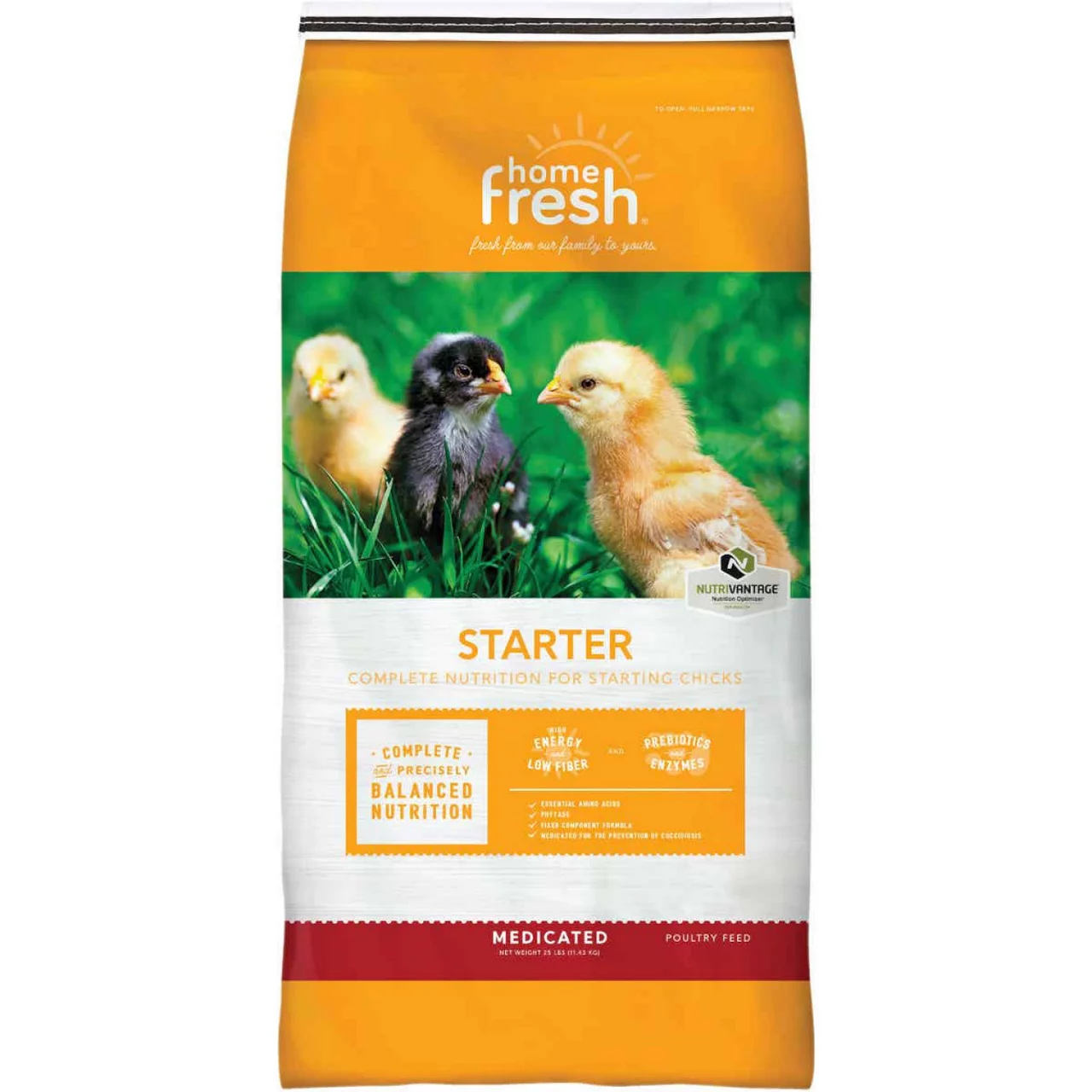
Chicks should be fed a complete starter chick feed, available at our store for their first 20 weeks. A chick starter feed contains all the nutrition that chicks need to develop properly and grow into strong, healthy adults. Chick starter is higher in protein and crushed into smaller pieces than a layer feed, so it is easier for chicks to eat.
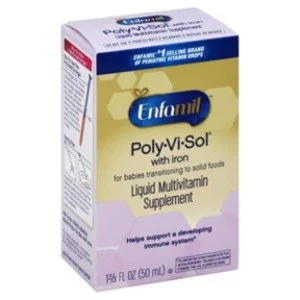
New chicks also need supplements added to their water during the first few days they’re home. Two options are either adding some probiotics to the water (such as Enfamil Poly-Vi-Sol), or adding a holistic supplement like apple cider vinegar. Any of these options will give the chicks’ immune systems and digestive systems a good jump on fighting off disease and functioning properly. After the first 2-3 days, you can switch out the supplemented water for fresh, pure water (I tend to keep the supplements up periodically while they are young to ensure good health). Make sure the water is at brooder temperature before showing your chicks where to get their first drink.
#2. Introducing Food, Water, & Heat
Once the brooder is prepped, it’s time to introduce the chicks to their new home! First, introduce the baby chicks to their water and food. Teaching your new chicks were to find sustenance is essential for them to thrive in their new home. Mama hen would naturally show her chicks were to find food and water, so you should do the same with your brood! The chicks don’t instinctively know to go looking for food and water until you show them where to find those resources. Try to encourage your chicks to get a drink of water before they do anything else. This will help prevent pasty butt (more on that later) and ensure the chicks stay hydrated. Gently guide the chicks near the water source and then gently dip each of their beaks into the water (or tap their beak gently against a poultry nipple if using a nipple water system).
After everyone has gotten a drink of water, show them where to find food. Sprinkle some of the chick starter around the feeder. The chicks’ curiosity will get the best of them and they will inevitably check out what all the fuss is about. Once the chicks are enthusiastically pecking at the food that is on the ground, show them where to find more food in the feeder.
Monitor the chicks closely for the first few hours. Ensure that they are all eating and drinking and moving to and from the heat source freely. They will huddle up as a flock to keep warm under the heat source.
#3. Setting Up Your Heat Source
Even after introducing your chicks to the heat source, you’ll need to continue monitoring their relationship to the available heat. A baby chick cannot control its own body temperature for the first few days of its life. Its fine downy feathers are also not insulating enough to help maintain a constant body temperature. Thus, supplemental heat is a necessary element of a baby chick’s environment for the first few weeks of its life.
The degree to which a baby chick needs supplemental heat will be affected by several factors, including the brooder location, type of heat source you are using, and the age of the chick.
Ideally, have the brooder located in an area that stays at least 55-60°F. The external temperature will affect how often and to what degree you must adjust the supplemental heat. The supplement heat should begin at around 98 degrees (with light about 18” off the floor of the brooder container). After two weeks at 98 degrees, you will adjust the tilt (1-2”) on the light slightly each week to reduce the degrees in brooder by 5.
# Cleaning and Care
Chicks need daily care, ideally twice a day (I tend to do morning and night to ensure a clean environment for them – they are messy). A clean brooder is essential to raising healthy chicks, and daily cleaning is mandatory to keep disease causing organisms from taking up residence. The good news is that daily chick care is really quite simple! Here is a short routine that you can follow for morning and evening chick care:
· Replace the litter whether its newspaper, paper towels are shavings.
· Fill feeder as needed.
· Refresh water at least once a day.
· Heighten feeder, waterer, and heat source as necessary.
#5. Are your chicks healthy
A lot of times raising chicks can be intimidating because >span >small, and it seems like there are endless things that could go wrong or ail your new babies. By keeping a clean and dry brooder, providing the proper diet, properly monitoring heat needs, and adding some simple supplements to your chicks’ water, you can prevent quite a few ailments from becoming an issue. However, when things do go wrong, you should be able to recognize them as soon as possible.
Here are some signs and symptoms of a sick chick:
· Poop stuck to the vent (butt)
· Lack of interest in interacting with the other chicks
· Lethargy and inactivity
· Prolonged time under the heat source
· Unwilling to eat or drink
One of the most common ailments you will encounter with baby chicks is pasty butt. Anything that causes stress to baby chicks will give them pasty butt. Pasty butt is when poop sticks to the vent opening and prevents the chick from expelling waste properly. >span >blockage is not taken care of. To treat pasty butt, you will want to gently soak or rinse the poop blockage in warm water and then gently rub it off simply with a paper towel or rag in the kitchen sink. The important part about treating pasty butt is making sure the chick does not get too chilled after the blockage has been rinsed away.
Other common health ailments that you will want to be aware of when brooding your chicks include coccidiosis and Marek’s disease. Coccidia (coccidiosis) shows up in the form of bloody droppings. Marek’s disease is a much sneakier disease and can show up in the form of paralysis or sudden death.
NOW...onto the products... Here is our custom list of your needs to raise your chicks into healthy egg laying friends.
Shop now