Start with Your Climate
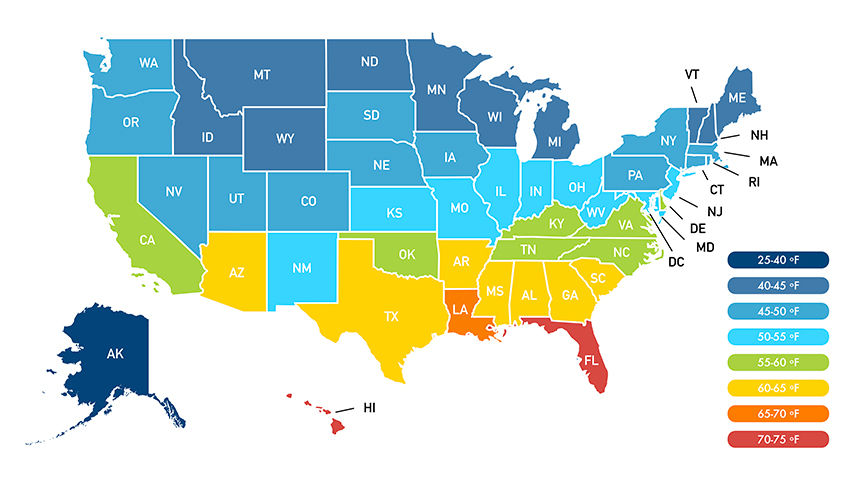
The first step when choosing grass seed for your lawn is to know your climate, which will determine the type to buy. Cool- and warm-season grass regions tend to be the most straightforward, but homeowners in the transition zone may need to opt for a blend of both seasons’ grasses that can adapt to trickier temperature shifts.
Cool-Season Grasses
These grasses are best for northern climates, which make up the biggest swath of the US. Cool-season grasses stretch from the Pacific Northwest, including most of California, all the way across the country to Maine, reaching to the northern parts of the Carolinas. They typically germinate faster than warm-season grasses. Plant new lawns in the fall for best results.
- Ideal soil temps: 50–65 °F
- Planting season: August–October
- Examples: Kentucky bluegrass, perennial ryegrass, fine/tall fescue
- Key traits: Stay green longer in spring and fall, dormant in winter, struggle in extreme heat
Transition-Zone Grasses
Some grasses, like Kentucky bluegrass for a cooler part of the transition zone and Bermuda, for the warmer areas, can be planted in this region. Or choose a blend of warm-season and cool-season grasses that will adapt to unpredictable climate conditions and thrive from spring to fall. Plant according to the grass type.
- Ideal soil temps: 60–75 ºF
- Planting season: Determined by grass type. For blends, be sure to follow package instructions for your particular mix
- Examples: Kentucky bluegrass, Bermuda, fine/tall fescue, Zoysia
- Key traits: Grow well and can adapt to both warm and cold climates. Sometimes feature blends of cool- and warm-season seeds
Warm-Season Grasses
Warm-season grasses grow from the southeastern tip of California to the southeastern US coast, including Louisiana and Florida. These drought-tolerant grasses generally require less water, so are ideal for hotter climates. Plant in late spring or early summer so seeds can take advantage of high soil temperatures to germinate.
- Ideal soil temps: 75–90 °F
- Planting season: April–June
- Examples: Bermuda, centipede, Bahia
- Key traits: Drought-tolerant, thrive in extreme heat, go dormant in cooler months